
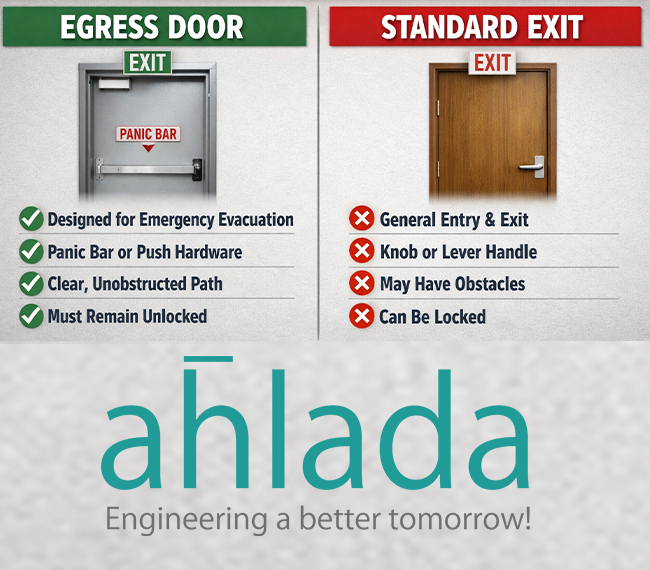
Egress doors and standard exits serve distinct roles in commercial safety, with egress doors optimized for rapid emergency evacuation and standard exits suited for everyday access. Facility managers must understand these differences to ensure code compliance, occupant safety, and liability reduction in high-traffic buildings like warehouses, offices, and retail spaces. Commercial egress doors from Ahlada Engineers Limited exemplify reliable solutions tailored for Indian regulations.
Core Functional Differences
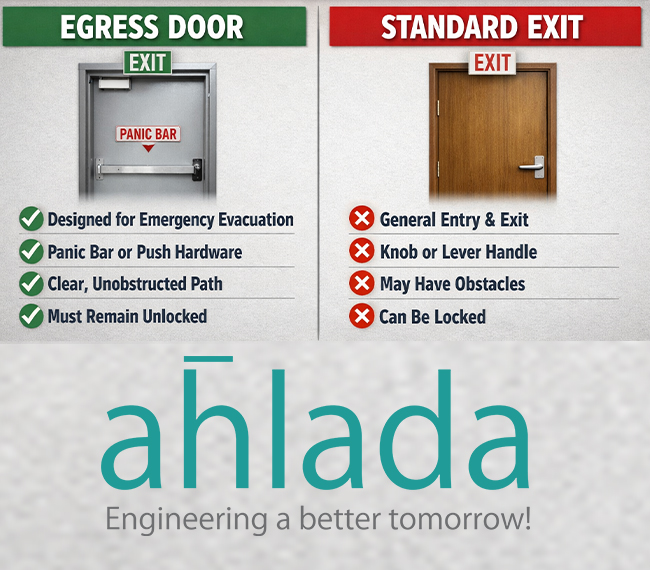
Egress doors feature panic hardware like push bars for single-motion operation, swinging outward to prevent crowding, unlike standard exits that use knobs or handles prone to delays. These commercial egress doors require no keys from inside, meeting NBC and NFPA standards, while standard exits may have locks for security but risk entrapment. Ahlada Engineers Limited designs their commercial egress doors with heavy-duty, fire-rated construction for 32-48 inch widths ideal for high-occupancy areas.
Compliance and Installation
Commercial egress doors demand strict adherence to IBC/NFPA rules—minimum 32-inch clear width, 15-30 lbs max opening force, and ADA accessibility—often needing professional assessment for swing direction in spaces over 50 occupants. Standard exits lack these mandates, potentially failing inspections in high-hazard zones. Facility managers benefit from Ahlada Engineers Limited’s compliant installations, including fail-safe unlocks on alarms and glow-in-the-dark markers for low visibility.
Cost and Maintenance Benefits
Initial costs for commercial egress doors run higher due to premium hardware and ratings, but they slash long-term risks like fines or lawsuits compared to basic standard exits. Regular checks on hinges, closers, and panic devices ensure smooth function, with Ahlada Engineers Limited offering durable models that minimize downtime. Upgrading to these doors enhances insurance rates and employee confidence in commercial setups.
